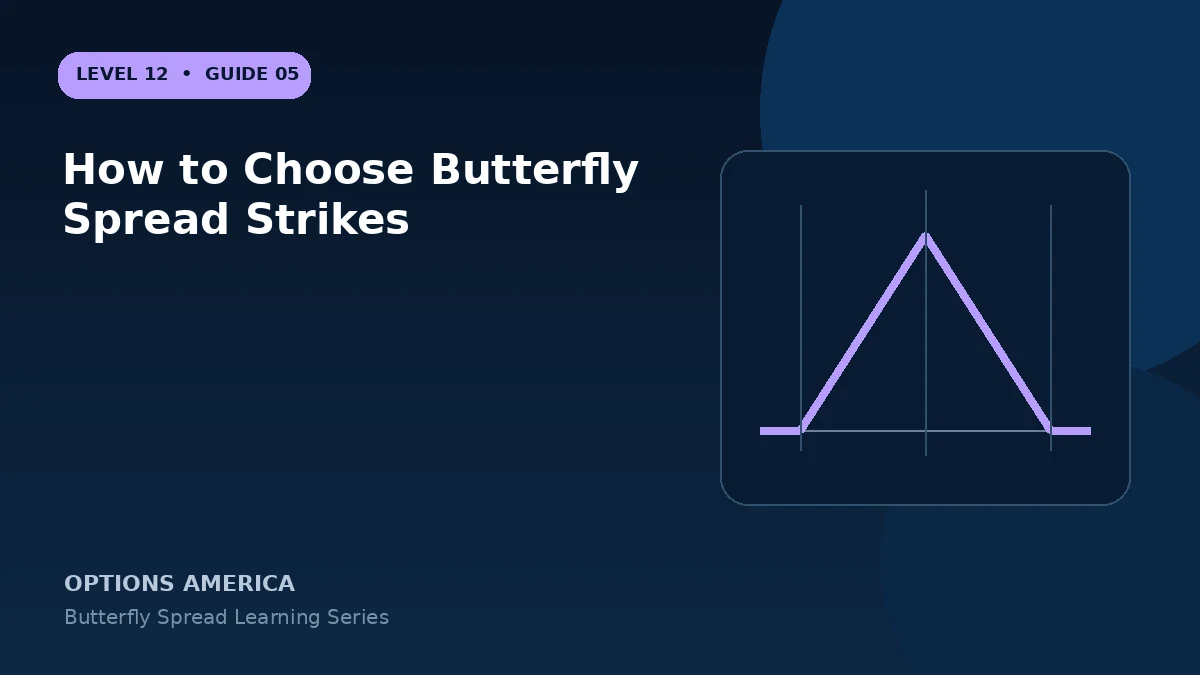
Choose the lower strike, body and upper strike using the target price, wing width, debit, delta, liquidity and desired profit zone.
Select the body
Place the middle strike near the price forecast for expiration, not automatically at the current stock price. Consider available strike increments and whether the target is realistic within the time selected.
Choose wing width
Wider equal wings increase maximum intrinsic value but usually cost more and may change the profitable range. Narrow wings can offer large percentage returns while being more sensitive to fees and forecast error.
Use delta and probability carefully
Delta can help describe current directional exposure, but it is not a fixed probability. Model several underlying prices because the butterfly's net delta changes sign around the body.
Check three markets
The middle strike needs enough liquidity for two contracts, and both wings need executable quotes. Evaluate the combined bid-ask spread rather than relying on theoretical midpoint values.
A practical example
For a $100 target, compare 97.5/100/102.5, 95/100/105 and 90/100/110 butterflies. Each changes debit, profit zone and sensitivity.
This simplified example focuses on one structure and selected expiration outcomes. Live option prices also reflect the underlying price, time decay, rates, dividends, liquidity and transaction costs. Greeks are theoretical estimates, not guarantees.
Frequently asked questions
Must the body be ATM?
No. It should reflect the forecast target.
Are wider wings always better?
No. They change cost and risk as well as reward.
Why is body liquidity important?
Two body contracts magnify slippage at that strike.
Continue the Butterfly Spreads cluster
Explore related guides: Butterfly Spread Expiration and DTE Selection · Broken Wing Butterfly Explained · When to Close a Butterfly Spread. For a structured sequence, use the free Level 12 – Butterfly Spread course.
Options involve risk and are not suitable for every investor. This material is educational and is not investment, tax or legal advice. Greeks are theoretical estimates, and contract terms and broker requirements can vary.