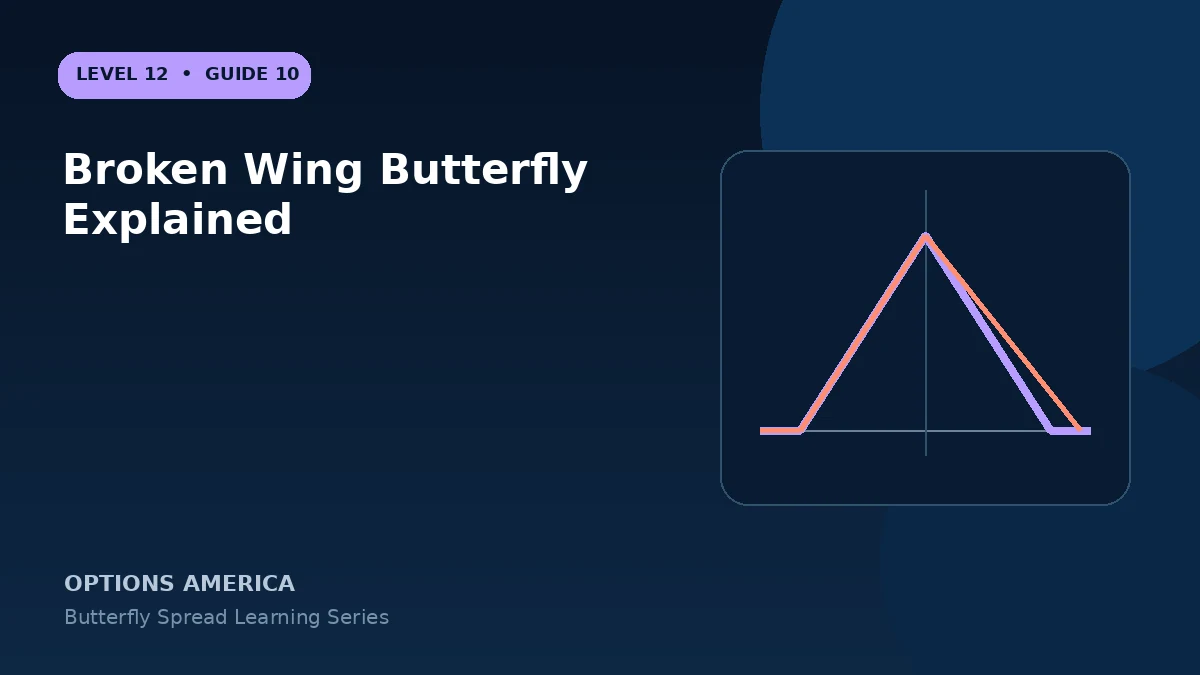
Learn how unequal butterfly wings reshape debit, credit, breakevens, directional bias and maximum loss.
How it differs
A symmetrical butterfly has equal lower and upper wing widths. A broken-wing version moves one outer strike, so the expiration payoff is no longer balanced around the body.
Why traders use it
The unequal wing can lower the debit, create a small credit or move a breakeven. That improvement is funded by greater exposure on the wider side, not by eliminating risk.
Calculate each side
Do not use the standard equal-wing maximum-profit formula blindly. Map payoff at every strike and calculate the widest adverse interval, net debit or credit, and assignment outcomes.
Directional use
Strike placement can express a bullish or bearish bias while still targeting the body region. The target, expected path and side of larger loss must agree with the thesis.
A practical example
A 95/100/108 call butterfly has a five-point lower wing and eight-point upper wing. It may cost less, but upside loss is no longer equal to downside debit risk.
This simplified example focuses on one structure and selected expiration outcomes. Live option prices also reflect the underlying price, time decay, rates, dividends, liquidity and transaction costs. Greeks are theoretical estimates, not guarantees.
Frequently asked questions
Is broken wing safer?
Only on one side; the other side can carry more risk.
Can it open for a credit?
Sometimes, depending on widths and pricing.
Are breakevens symmetrical?
No. Calculate the actual payoff.
Continue the Butterfly Spreads cluster
Explore related guides: Butterfly Spread Greeks: Delta, Gamma, Theta and Vega · When to Close a Butterfly Spread · Butterfly Spread Example With Full Payoff Scenarios. For a structured sequence, use the free Level 12 – Butterfly Spread course.
Options involve risk and are not suitable for every investor. This material is educational and is not investment, tax or legal advice. Greeks are theoretical estimates, and contract terms and broker requirements can vary.