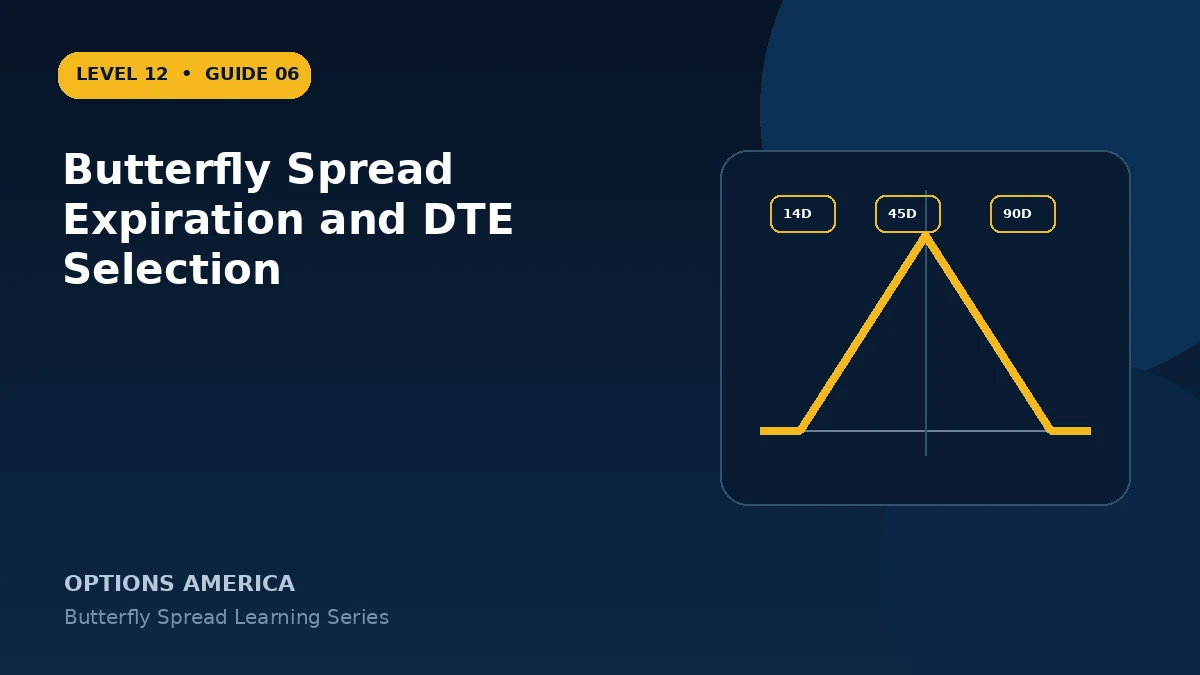
Choose butterfly expiration using the target's timing, theta, gamma, vega, event risk and time available for management.
Near-term butterflies
Short duration can provide inexpensive debit and fast payoff changes, but the profit tent narrows quickly and gamma becomes concentrated. A small timing error can move the final price outside the peak.
Longer-duration butterflies
More time allows the thesis to develop and can reduce immediate gamma, but it normally increases debit and vega exposure. The underlying may pass through the target too early.
Event placement
Earnings and macro events can create large moves and IV shifts. Decide whether the butterfly targets the event outcome, a post-event pin, or a move that occurs outside the event window.
Plan the exit date
Many butterflies are closed before expiration because maximum theoretical profit is difficult to capture and assignment risk rises. Set a date for reassessment rather than relying only on price.
A practical example
If the target is based on a six-week catalyst, compare expirations seven, nine and twelve weeks away using live Greeks, debit and expected movement.
This simplified example focuses on one structure and selected expiration outcomes. Live option prices also reflect the underlying price, time decay, rates, dividends, liquidity and transaction costs. Greeks are theoretical estimates, not guarantees.
Frequently asked questions
What DTE is best?
There is no universal number; match it to the thesis.
Why not always choose the nearest date?
The target may arrive after the payoff window collapses.
Does more time guarantee safety?
No. It adds cost and volatility exposure.
Continue the Butterfly Spreads cluster
Explore related guides: Call Butterfly vs Put Butterfly · Butterfly Spread Greeks: Delta, Gamma, Theta and Vega · Butterfly Spread: 12 Mistakes to Avoid. For a structured sequence, use the free Level 12 – Butterfly Spread course.
Options involve risk and are not suitable for every investor. This material is educational and is not investment, tax or legal advice. Greeks are theoretical estimates, and contract terms and broker requirements can vary.