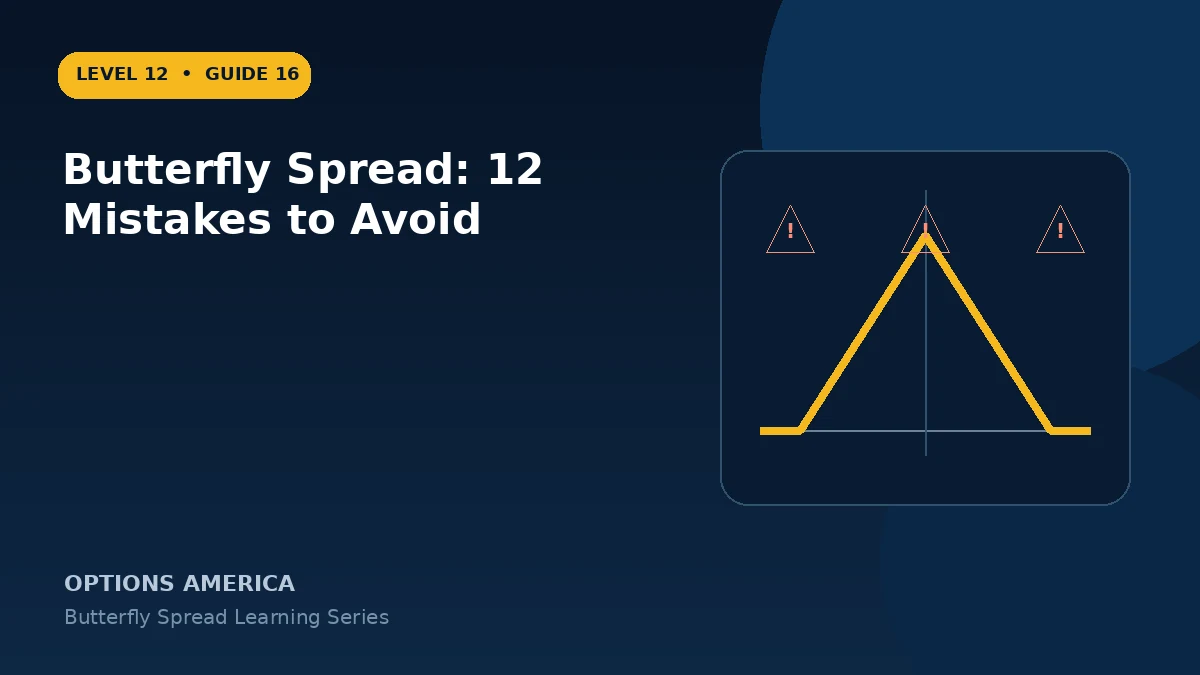
Avoid common butterfly errors involving target selection, wing width, debit, liquidity, Greeks, adjustments and expiration.
Mistakes 1–3: poor target
Do not place the body without a forecast, assume neutral means any sideways price or choose expiration before the catalyst. Direction and timing must converge on the target.
Mistakes 4–6: construction
Do not confuse call and iron butterflies, use the wrong 1:-2:1 ratio or apply equal-wing formulas to broken wings. Verify the full payoff before entry.
Mistakes 7–9: execution
Do not ignore four-leg commissions, accept wide markets or trust midpoint values that cannot fill. Body-strike slippage is multiplied across two short contracts.
Mistakes 10–12: management
Do not expect maximum profit before expiration, adjust without recalculating total risk or hold through pin and assignment risk unintentionally. Confirm every closing fill.
A practical example
A trader buys a cheap narrow butterfly with no time-specific target, sees the stock touch the body early and expects maximum profit. Remaining extrinsic value and later movement produce a loss.
This simplified example focuses on one structure and selected expiration outcomes. Live option prices also reflect the underlying price, time decay, rates, dividends, liquidity and transaction costs. Greeks are theoretical estimates, not guarantees.
Frequently asked questions
What is the most common mistake?
Treating the payoff peak as easy to capture.
Can a correct direction still lose?
Yes, if timing or final price misses the tent.
Why verify the ratio?
One missing or extra body contract creates a different risk profile.
Continue the Butterfly Spreads cluster
Explore related guides: Butterfly Spread Explained: Strategy, Risk and Reward · How to Choose Butterfly Spread Strikes · Broken Wing Butterfly Explained. For a structured sequence, use the free Level 12 – Butterfly Spread course.
Options involve risk and are not suitable for every investor. This material is educational and is not investment, tax or legal advice. Greeks are theoretical estimates, and contract terms and broker requirements can vary.