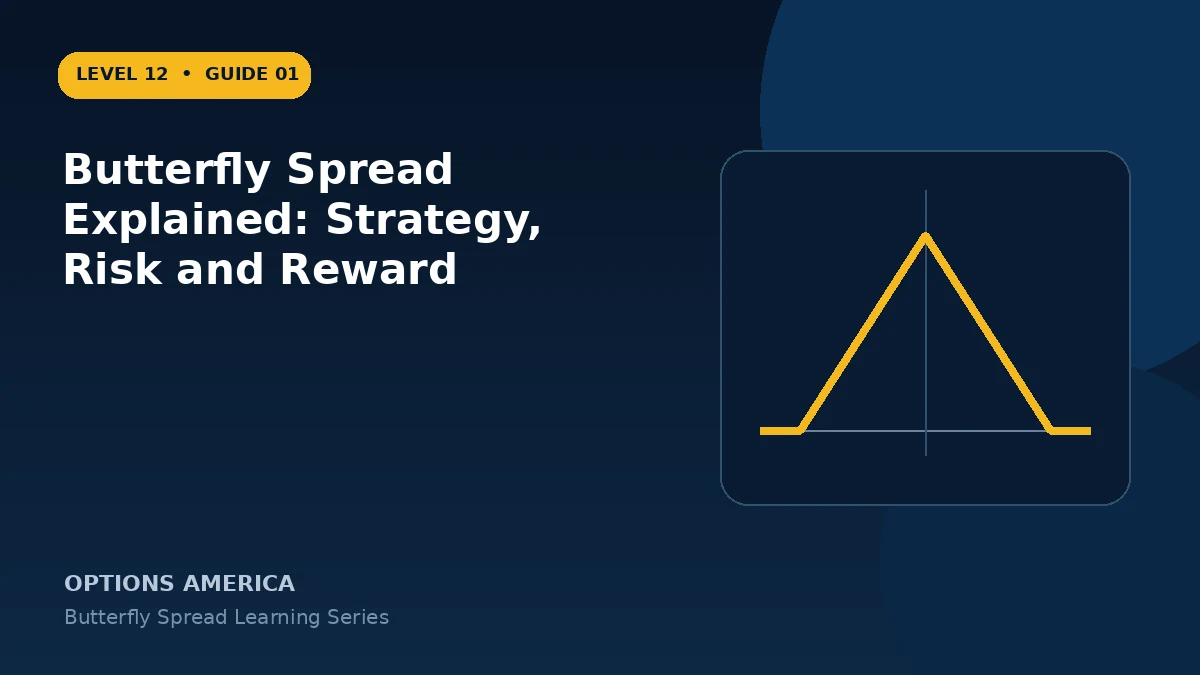
Learn how a butterfly spread uses three strikes to create a defined-risk options position centered on a target price.
The three-strike structure
A long call butterfly buys one lower-strike call, sells two middle-strike calls and buys one higher-strike call with the same expiration. A put butterfly can create the same expiration shape using puts.
The market outlook
The position fits a forecast that the underlying will move toward a specific target by expiration. It is not simply neutral: entry price relative to the body strike determines the initial directional exposure.
Defined payoff
Maximum loss is generally the opening debit. Maximum profit for equal wings is the wing width minus that debit, reached at the middle strike at expiration. Two breakevens surround the body.
Before expiration
Delta, gamma, theta, vega, skew and time affect all four contracts. The narrow expiration peak does not describe interim value, and reaching the body early does not guarantee maximum profit.
A practical example
Buy the 95 call, sell two 100 calls and buy the 105 call for a $1.20 debit. Maximum risk is $120 and maximum expiration profit at $100 is $380 before costs.
This simplified example focuses on one structure and selected expiration outcomes. Live option prices also reflect the underlying price, time decay, rates, dividends, liquidity and transaction costs. Greeks are theoretical estimates, not guarantees.
Frequently asked questions
Is a butterfly neutral?
It targets a price area, although it can begin bullish or bearish relative to that target.
Is risk unlimited?
No. A standard long butterfly has defined debit risk.
Where is maximum profit?
At the middle strike at expiration.
Continue the Butterfly Spreads cluster
Explore related guides: How to Build a Butterfly Spread · Butterfly Spread Expiration and DTE Selection · Butterfly Spread Greeks: Delta, Gamma, Theta and Vega. For a structured sequence, use the free Level 12 – Butterfly Spread course.
Continue learning: Read the Calendar Spread guide and take the free Level 13 course.
Advanced strategy: Read the Backspread guide and take the free Level 14 course.
Options involve risk and are not suitable for every investor. This material is educational and is not investment, tax or legal advice. Greeks are theoretical estimates, and contract terms and broker requirements can vary.