Learn how a bear put spread combines a long put and a lower-strike short put to create a defined-risk bearish options position.
How the strategy is built
Buy one put and sell another put on the same underlying and expiration, using a lower strike for the short leg. The higher-strike put normally costs more, so the position opens for a net debit.
The market outlook
The strategy fits a moderately bearish forecast with a defined downside target. The best expiration outcome occurs at or below the short strike, where the spread reaches its full intrinsic width.
Defined profit and loss
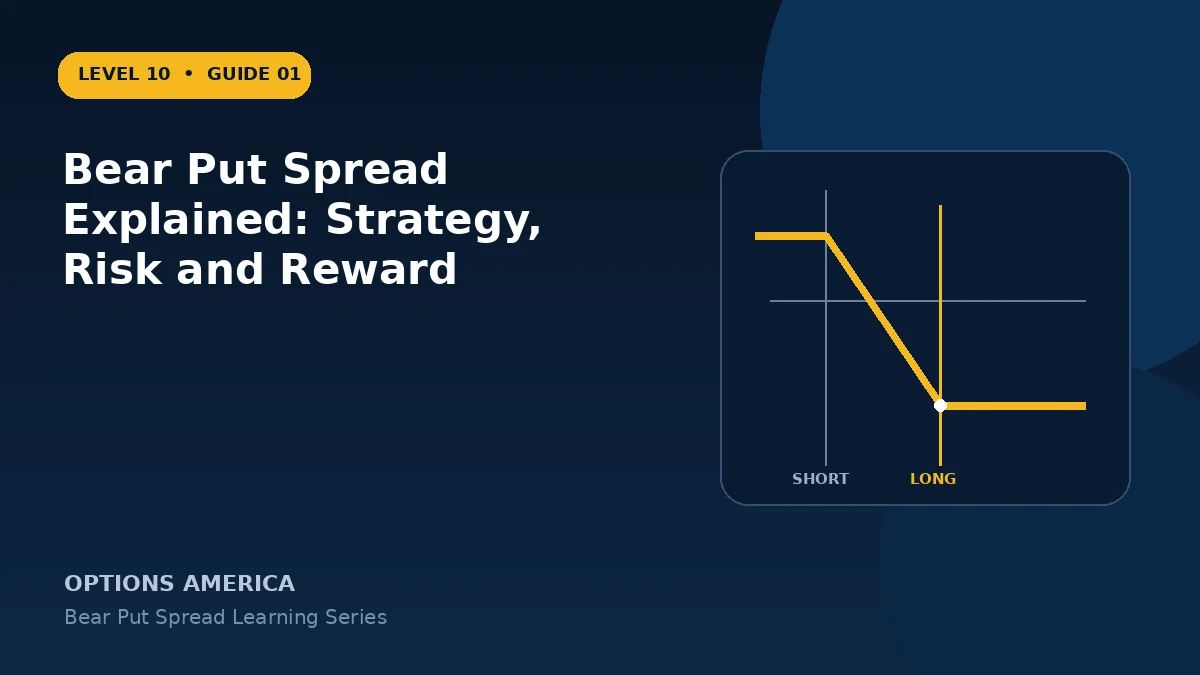
Maximum loss is generally the debit paid. Maximum profit equals the strike width minus the debit, multiplied by the contract multiplier. Expiration breakeven is the long strike minus the debit per share.
Before expiration
Delta, gamma, theta, implied volatility and skew affect both legs. A payoff chart describes expiration only; the spread can trade above or below that path while time and uncertainty remain.
A practical example
Buy the 100 put for $6 and sell the 90 put for $2. The $4 debit creates a $400 maximum loss, $600 maximum profit and a $96 expiration breakeven.
This simplified example focuses on the spread at a specific moment and expiration outcome. Live option prices also reflect the underlying price, time decay, rates, dividends, liquidity and transaction costs. Greeks are theoretical estimates, not guarantees.
Frequently asked questions
Is a bear put spread bearish?
Yes. It normally has negative delta and benefits from a decline in the underlying.
Can it lose more than the debit?
A correctly maintained standard spread generally limits expiration loss to the debit plus costs.
Why sell the lower put?
It reduces cost and some Greek exposure, but caps profit below that strike.
Continue the Bear Put Spreads cluster
Explore related guides: How to Build a Bear Put Spread · How to Choose a Bear Put Spread Expiration · How Implied Volatility Affects a Bear Put Spread. For a structured sequence, use the free Level 10 – Bear Put Spread course.
Apply the concept: Continue with the Short Iron Condor guide and the free Level 11 course.
Options involve risk and are not suitable for every investor. This material is educational and is not investment, tax or legal advice. Greeks are theoretical estimates, and contract terms and broker requirements can vary.