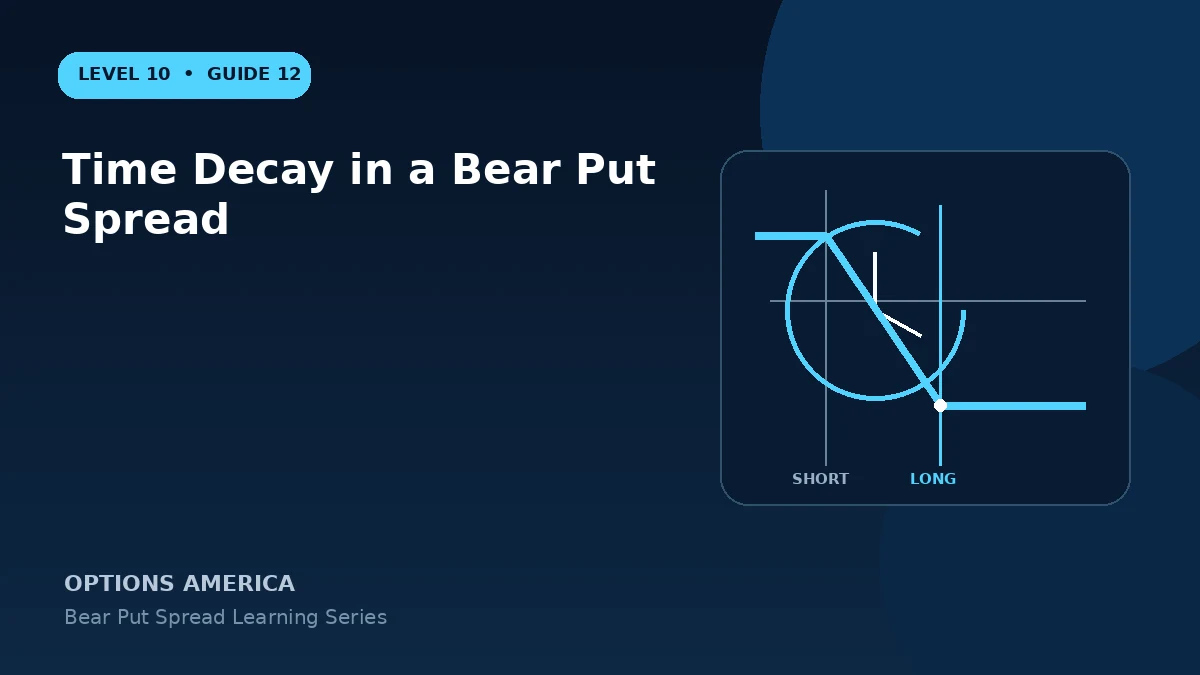
See how theta changes when the underlying is above, between or below the two put strikes as expiration approaches.
Above the long strike
When both puts are OTM, the long put often dominates and net theta is negative. A quiet or rising underlying can steadily erode the debit.
Between the strikes
The theta profile can change quickly because the position is transitioning from uncertain time value toward intrinsic expiration value. Exact price relative to breakeven matters.
Below the short strike
When both puts are ITM and the spread is near maximum value, passing time can help it converge toward full width. Early assignment and executable closing prices still require attention.
Plan a time stop
Track both days remaining and thesis progress. Waiting for a late decline can expose the position to accelerating decay, while waiting for the final profit dollars adds reversal and expiration risk.
A practical example
A 100/90 spread below $88 may converge toward $10 as time passes, while the same spread above $100 can decay toward zero.
This simplified example focuses on the spread at a specific moment and expiration outcome. Live option prices also reflect the underlying price, time decay, rates, dividends, liquidity and transaction costs. Greeks are theoretical estimates, not guarantees.
Frequently asked questions
Is theta always harmful?
No. Below the short strike, time may help convergence.
Does the short put reduce decay?
It offsets part of the long put's theta.
Why use a time stop?
A delayed decline may no longer justify the remaining decay risk.
Continue the Bear Put Spreads cluster
Explore related guides: When to Close a Bear Put Spread · How to Build a Bear Put Spread · Bear Put Spread vs Long Put. For a structured sequence, use the free Level 10 – Bear Put Spread course.
Options involve risk and are not suitable for every investor. This material is educational and is not investment, tax or legal advice. Greeks are theoretical estimates, and contract terms and broker requirements can vary.