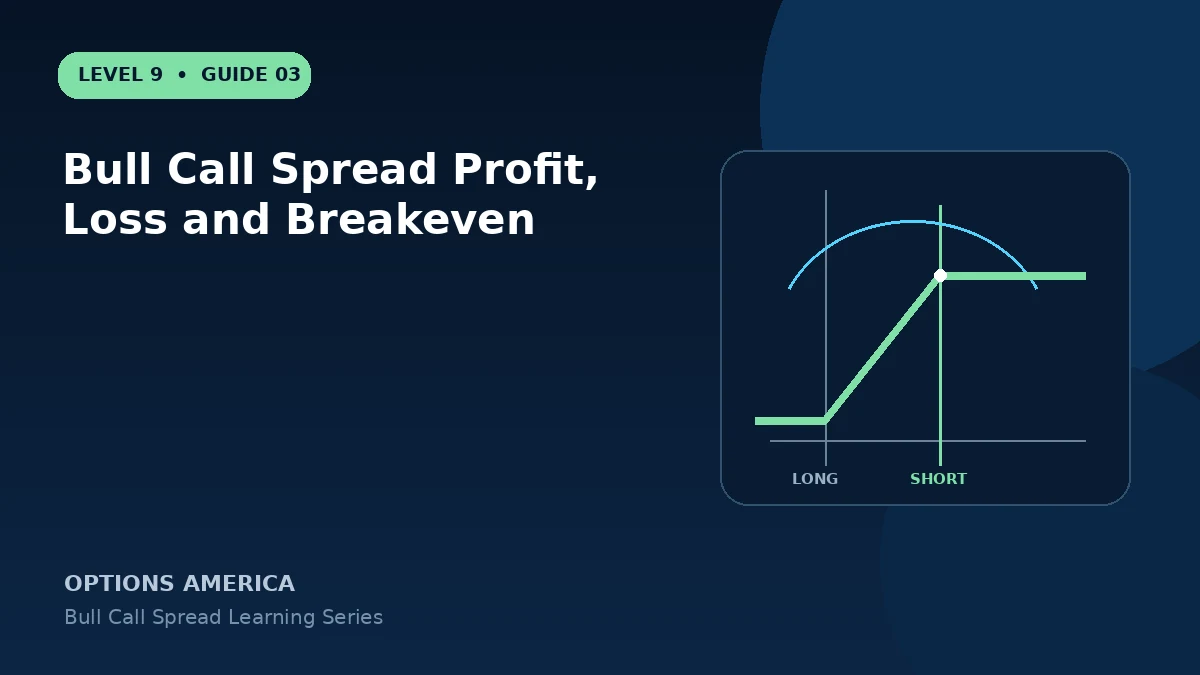
Calculate the maximum profit, maximum loss and expiration breakeven of a bull call debit spread using its strikes and net debit.
Maximum loss
Maximum loss generally equals the net debit paid when both options expire worthless. Multiply the per-share debit by the contract multiplier and number of spreads, then add transaction costs.
Maximum profit
Maximum profit equals the distance between strikes minus the debit. It is reached at expiration when the underlying is at or above the short strike, subject to exercise, assignment and settlement.
Breakeven
The expiration breakeven is the long-call strike plus the net debit per share. Breakeven before expiration is not fixed because remaining time value and implied volatility affect both option prices.
Reward-to-risk
Compare maximum profit with maximum loss, but do not confuse a favorable ratio with a high probability. Strike placement, time and volatility determine how likely each outcome may be.
A practical example
A 50/55 call spread costs $1.80. Maximum loss is $180, maximum profit is ($5 − $1.80) × 100 = $320, and expiration breakeven is $51.80.
This simplified example focuses on the spread at a specific moment and expiration outcome. Live option prices also reflect the underlying price, time decay, rates, dividends, liquidity and transaction costs. Greeks are theoretical estimates, not guarantees.
Frequently asked questions
Where is maximum profit reached?
At expiration, it is generally reached at or above the short-call strike.
Is breakeven the same before expiration?
No. Before expiration, extrinsic value can shift the mark.
Do commissions matter?
Yes. They reduce profit and increase the effective loss and breakeven.
Continue the Bull Call Spreads cluster
Explore related guides: Bull Call Spread Example With Full Payoff Scenarios · Bull Call Spread vs Bull Put Spread · When to Close a Bull Call Spread. For a structured sequence, use the free Level 9 – Bull Call Spread Strategy course.
Options involve risk and are not suitable for every investor. This material is educational and is not investment, tax or legal advice. Greeks are theoretical estimates, and contract terms and broker requirements can vary.