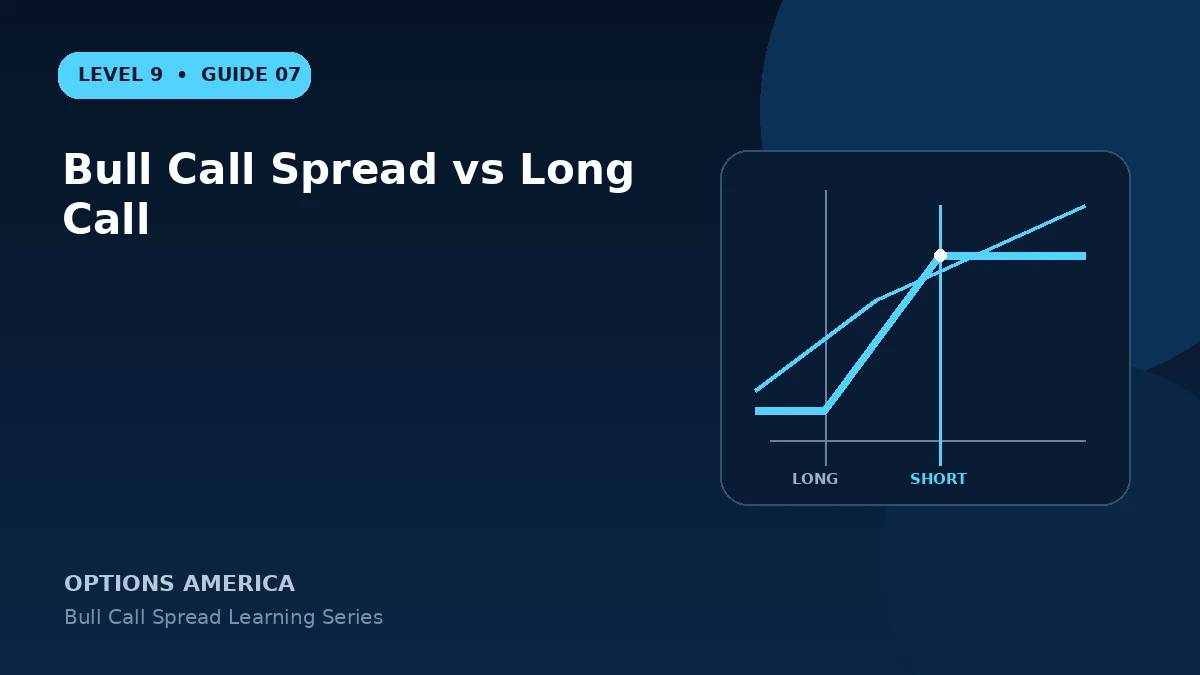
Compare a call debit spread with buying one call across cost, maximum profit, breakeven, Greeks and the size of the expected move.
Cost and maximum loss
A bull call spread normally costs less because the short call offsets part of the long-call premium. Maximum loss is lower in dollars, but both positions can lose 100% of their debit.
Upside potential
A long call has uncapped upside above breakeven, while the spread stops gaining intrinsic value above the short strike. The spread is better aligned with a defined, moderate price target.
Greek exposure
Selling the higher strike reduces positive delta, gamma and vega as well as negative theta. That smaller Greek profile can make the spread less sensitive to both favorable and unfavorable changes.
Decision framework
Choose based on target range, volatility view, time horizon and acceptable debit. Do not choose the spread only because it appears cheaper; understand what upside has been sold.
A practical example
A $6 long call may offer unlimited upside, while selling a $2 higher-strike call creates a $4 spread. The $2 savings also creates a firm profit ceiling.
This simplified example focuses on the spread at a specific moment and expiration outcome. Live option prices also reflect the underlying price, time decay, rates, dividends, liquidity and transaction costs. Greeks are theoretical estimates, not guarantees.
Frequently asked questions
Which has more upside?
The standalone long call has uncapped upside.
Which has lower theta?
The spread often has less negative net theta.
Can both lose everything paid?
Yes, if they expire below the long strike.
Continue the Bull Call Spreads cluster
Explore related guides: Bull Call Spread vs Bull Put Spread · Time Decay in a Bull Call Spread · How to Build a Bull Call Spread. For a structured sequence, use the free Level 9 – Bull Call Spread Strategy course.
Options involve risk and are not suitable for every investor. This material is educational and is not investment, tax or legal advice. Greeks are theoretical estimates, and contract terms and broker requirements can vary.