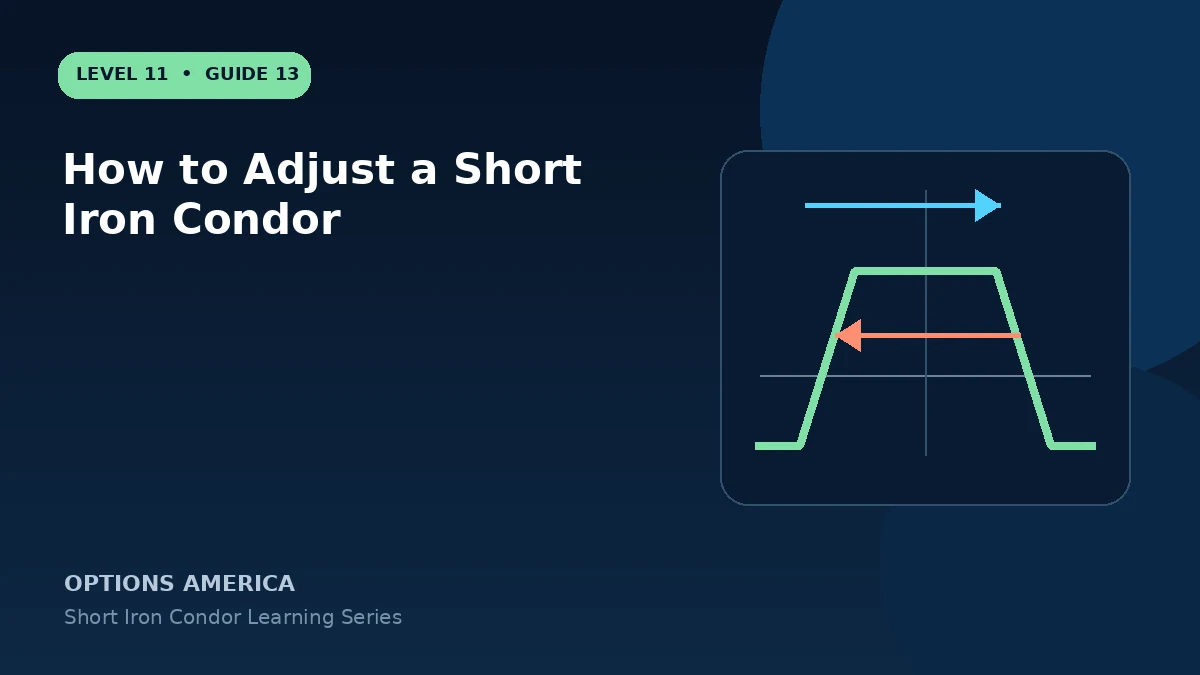
Evaluate rolling, moving the untested side, adding protection, narrowing risk or closing without turning one defined trade into uncontrolled exposure.
Close or reduce
Closing the complete condor or reducing size is the cleanest way to lower risk. Defined maximum loss is not a reason to keep a broken position open.
Move the untested side
Rolling the profitable side toward the market may collect credit and reduce delta, but it narrows the range and creates whipsaw risk if price reverses.
Roll the tested side
Moving threatened strikes away or out in time can require a debit, widen risk or extend exposure. Recalculate total credit and maximum loss after every proposed roll.
Protect the account
Confirm all fills and maintain the long wings. Closing a protective option or one spread can leave uncovered short-option risk, assignment exposure or unexpected buying-power usage.
A practical example
Price approaches the short call. Rolling the put spread upward adds credit but narrows the downside room; rolling calls outward may cost debit. Both choices must be compared with closing.
This simplified example focuses on one position and a limited set of price and volatility outcomes. Live option prices also reflect the underlying price, time decay, rates, dividends, liquidity and transaction costs. Greeks are theoretical estimates, not guarantees.
Frequently asked questions
Must every tested condor be adjusted?
No. Closing can be the best risk decision.
Should I always roll the untested side?
No. It increases reversal risk.
Can an adjustment increase maximum loss?
Yes, especially when widths, quantities or expirations change.
Continue the Short Iron Condor cluster
Explore related guides: When to Close a Short Iron Condor · Short Iron Condor Profit, Loss and Breakevens · Short Iron Condor vs Short Strangle. For a structured sequence, use the free Level 11 – Short Iron Condor course.
Options involve risk and are not suitable for every investor. This material is educational and is not investment, tax or legal advice. Greeks are theoretical estimates, and contract terms and broker requirements can vary.