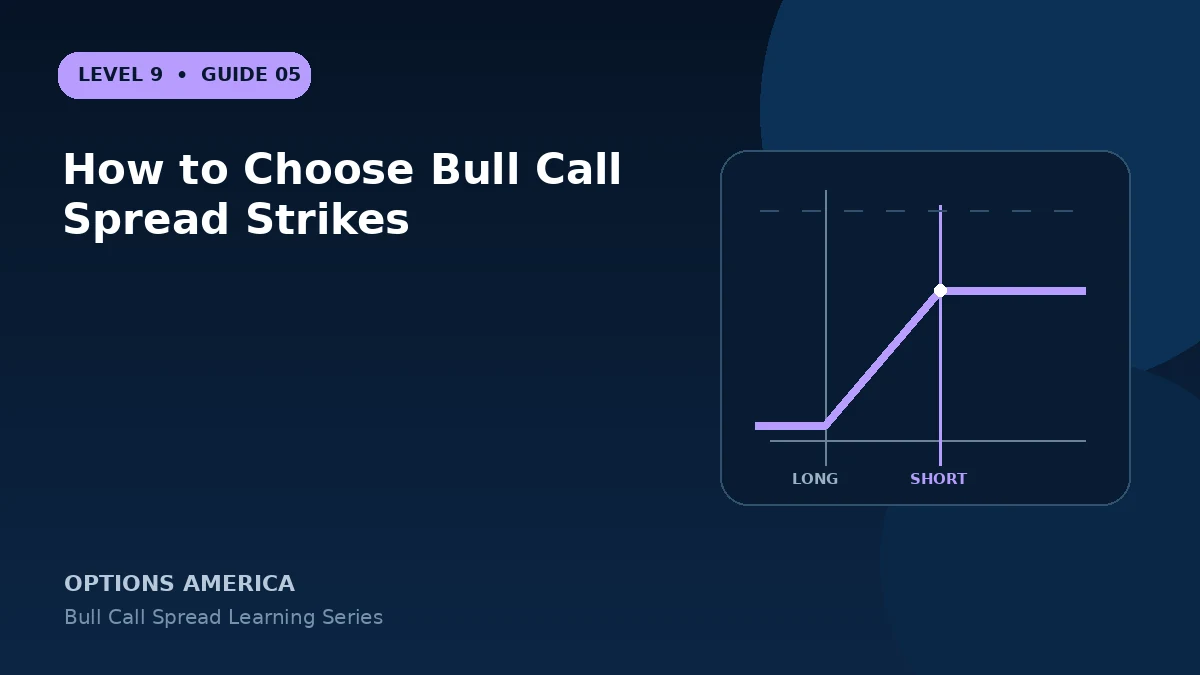
Choose long and short call strikes using the price target, delta, debit, breakeven, spread width and desired probability profile.
Place the long strike
An ITM long call usually creates higher delta and a larger debit. An OTM long call is cheaper but requires a stronger move. Compare the resulting breakeven and not just the quoted premium.
Place the short strike
The short strike often sits near the forecast target. Moving it higher increases possible profit but collects less premium; moving it lower reduces cost but caps the trade sooner.
Choose the width
Wider spreads generally offer more potential value and require more debit. Narrow spreads may show attractive percentage returns but can be more sensitive to execution costs and require price to finish in a smaller payoff zone.
Check both markets
Review bid-ask spreads, open interest and executable prices for both legs. A liquid long call cannot compensate for a wide or difficult short leg.
A practical example
With stock at $98 and a $108 target, compare 100/105, 100/110 and 105/110 spreads. Each has a different debit, breakeven, maximum profit and probability profile.
This simplified example focuses on the spread at a specific moment and expiration outcome. Live option prices also reflect the underlying price, time decay, rates, dividends, liquidity and transaction costs. Greeks are theoretical estimates, not guarantees.
Frequently asked questions
Should the short strike equal the target?
It is a useful starting point, not a rule.
Are ITM spreads safer?
They may have higher delta and cost; risk still equals the debit.
Does a wider spread always earn more?
It raises the cap but also commonly costs more.
Continue the Bull Call Spreads cluster
Explore related guides: How to Choose a Bull Call Spread Expiration · Bull Call Spread Greeks: Delta, Gamma, Theta and Vega · Bull Call Spread: 12 Mistakes to Avoid. For a structured sequence, use the free Level 9 – Bull Call Spread Strategy course.
Options involve risk and are not suitable for every investor. This material is educational and is not investment, tax or legal advice. Greeks are theoretical estimates, and contract terms and broker requirements can vary.