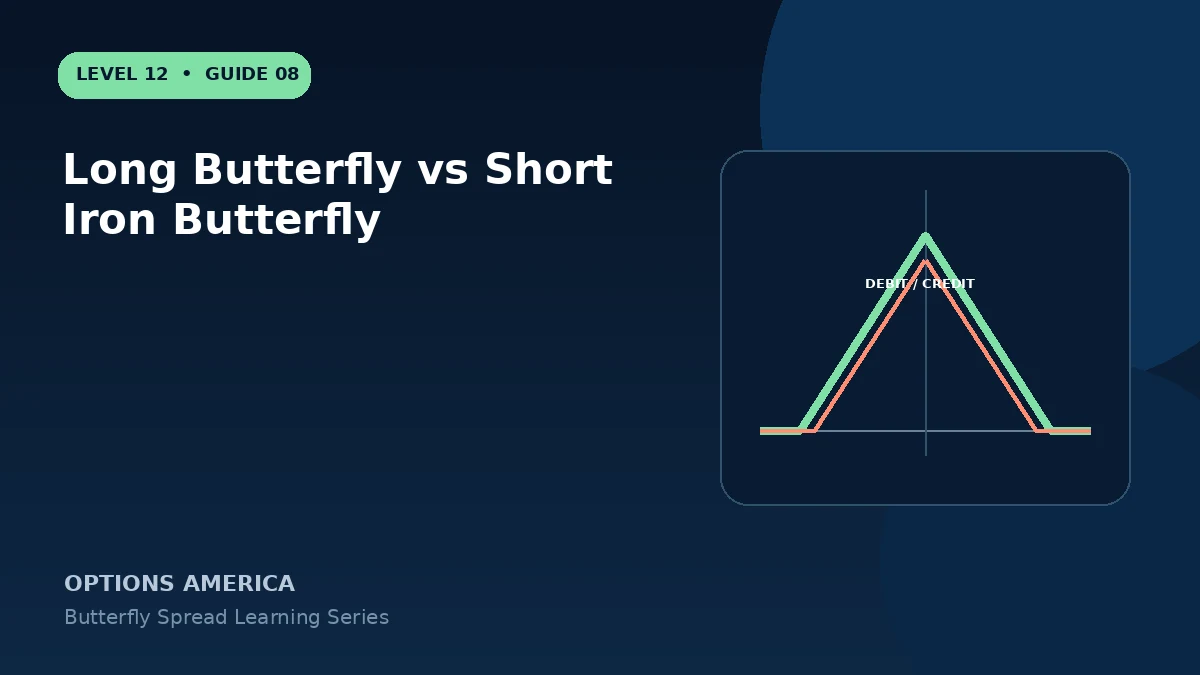
Compare a long debit butterfly with a short iron butterfly across construction, profit zone, volatility exposure and risk profile.
Construction
A standard long call butterfly uses one option type and a 1:-2:1 ratio. A short iron butterfly sells an ATM straddle and buys an OTM put and call as protective wings.
Debit and credit
The long butterfly normally pays a debit with that debit at risk. The short iron butterfly receives a credit, with maximum loss equal to wing width minus credit.
Greeks
Both can profit near a central price, yet entry Greeks and volatility behavior differ by moneyness and pricing. The short iron butterfly often begins short vega and positive theta.
Avoid naming confusion
Broker tickets may label structures differently. Verify exact strikes, quantities, option types, net price, maximum profit and maximum loss rather than trading from the strategy name.
A practical example
A 95/100/105 call butterfly costs $1.20. A 95-put/100-straddle/105-call iron butterfly receives a credit; both peak near $100 but have different cash flows and Greeks.
This simplified example focuses on one structure and selected expiration outcomes. Live option prices also reflect the underlying price, time decay, rates, dividends, liquidity and transaction costs. Greeks are theoretical estimates, not guarantees.
Frequently asked questions
Do both target one price?
Their expiration maximum profit is centered on the body strike.
Which receives credit?
The short iron butterfly.
Are risks the same?
Not automatically; compare actual debit, credit and widths.
Continue the Butterfly Spreads cluster
Explore related guides: Butterfly Spread vs Iron Condor · Theta and Time Decay in a Butterfly Spread · How to Build a Butterfly Spread. For a structured sequence, use the free Level 12 – Butterfly Spread course.
Options involve risk and are not suitable for every investor. This material is educational and is not investment, tax or legal advice. Greeks are theoretical estimates, and contract terms and broker requirements can vary.